Sunday, August 21, 2022

How To Recover the Password for an Encrypted Veracrypt Container

Veracrypt, the successor of Truecrypt, is a free and open-source encryption software. Think of it like Microsoft's Bitlocker -- except it is free and completely open source.[1]

In this blog post, I will briefly show you how to recover the password for a (non-system) Veracrypt container if you still remember a substantial part of it. I've managed to recover my own partially forgotten passwords using the methods I detail below. Essentially, we will be conducting a hybrid attack on the PBKDF2-derived key for the Veracrypt container -- i.e., a hybrid between a dictionary attack and a brute-force attack. The tools that we will make use of are any Linux distribution (Debian, Red Hat, etc.), Python, and Hashcat, a powerful and open-source password cracker.[2]

Let us begin. The first thing to bear in mind is that the first 512 bytes of a Veracrypt container is a header which contains all the necessary ingredients to calculate the key to your container (e.g., the salt). Below is a detailed table of (at least) what is contained in the first 512 bytes.


Note that the header is the first 512 bytes only in standard volumes or containers, not in system volumes. In the latter, Veracrypt documentation specifies that the header is the last 512 bytes of the first logical track. This is what the documentation states:

The first 512 bytes of the volume (i.e., the standard volume header) are read into RAM, out of which the first 64 bytes are the salt (see VeraCrypt Volume Format Specification). For system encryption (see the chapter System Encryption), the last 512 bytes of the first logical drive track are read into RAM (the VeraCrypt Boot Loader is stored in the first track of the system drive and/or on the VeraCrypt Rescue Disk).
In any case, we want to extract this derived key-hash and then check to see if it matches any of our computed hashes from a word list. If we get a match, then we will know that we have recovered our password! So the first thing we want to do is to extract these initial 512 bytes. This can be easily done in the Linux command line; just type the following in your terminal:

dd if=[container name] of=[anything] bs=512 count=1


"If" stands for "input file," and "of" stands for "output file." "bs" just means bytesize, and "count" just means how many iterations of the bytes to go through. So the above terminal command will produce the same output as the following:

dd if=[container name] of=[anything] bs=1 count=512


Alternatively, you can just run the following Python code to the same effect (just be sure to change the file names accordingly):

with open("in-file", "rb") as in_file, open("out-file", "wb") as out_file: out_file.write(in_file.read(512))


We have now extracted the header from the Veracrypt container. As we shall soon see, Hashcat has an option that will automatically recognize a Veracrypt header and compute the derived key from the information contained therein (e.g., from the salt and key-derivation function used). But first, let's generate the wordlist we will pass to Hashcat.

Now, for the sake of the demonstration here, we'll keep it simple. So let's say that our password that we forgot was ACHILLESheel2385. Furthermore, let's say that we remember ACHILLESheel, and that there was a 1 - 5 digit number at the end. So, taking a step back, it should be clear what we need to do: produce a word list containing every character set that matches the following RegEx pattern:

/ACHILLESheel\d{1,5}/

Thankfully, there's a great Python module that will construct all the strings that match a specified RegEx pattern -- exrex. In your terminal, type the following command (but just make sure that you have the exrex module installed):

python exrex.py 'ACHILLESheel\d{1,5}' -o wordlist


This will generate a wordlist of ACHILLESheel{all combinations of five digits} in wordlist.txt of your current working directory. We are now ready to use Hashcat. If you type "hashchat -h" in your terminal you should see that hashcat has a lot of numerical numbers associated with different types of hashing algorithms and software, including Veracrypt. Hashcat basically has preprogrammed binaries that are used to compute the hashes made from a wide variety of algorithims and programs. The numerical value that we are looking for is 13721, as this is Hascut's reference for Veracrypt's default encryption settings. There are other non-default options that Hashcat has, but 13721 is the one we are looking for.


So all the preparation is done: we are now ready to to run hashcat and crack the password! Type in the following command:

hashcat -m 13721 --status out-file wordlist.txt


Note that if you see that the 111110 passwords are taking too long to crack on your system, you can just "cheat" and use a different regex pattern that will drastically decrease the computing time (since this is just an example). For example, you can use /ACHILLESheel23\d{2}/. This will cut the password wordlist down from 111110 to 100! After you run Your output should be something like the following:

So there you have it  -- this is the process for successfully recovering a Veracrypt password that you partially remember! It's important to underscore that the more of your password you remember, the way easier it is to crack it. If you don't have any idea of what your password is, and just remember that it is very long and complex, it's very likely that all the computers in the world wouldn't be able to crack the password for aeons!

----------------------------------------------------------------------------

[1] In general, I believe that FOSS that is widely used is more secure than closed-source software counterparts. This is for the simple reason that FOSS is open-source software and so, if it is quite prominent (like Veracrypt, Signal, DD-WRT, Ansible, Ubuntu, Libre Office, Android, etc.), it should have undergone more security-expert scrutiny than its closed-source counterparts. Indeed, it should be continuously undergoing more scrutiny than its commercial closed-source counterparts. Now, one may argue that the sword cuts both ways here: the open-source nature of FOSS means that there are more malicious developers with access to the code base and actively trying to develop exploits against it. Thus, for example, there is more malware written against (closed-source) Windows operating systems than there is written against (open-source) Linux operating systems. While this is true, I still think that the sword cuts more in the way of security than insecurity here, as I doubt that critical vulnerabilities discovered by an APT open-source software will go undetected by the rest of the world's security experts for much longer than similar bvulnerabilities in closed-source software. The latter are simply lack boxes. There's no way for the world's security community to tell whether such software is safe and free of backdoors. So my view is that when it comes to security, FOSS is king. And I believe most infosec experts would agree. 

[2] We could also use Crunch, a program that generates password wordlists based on user-defined parameters. But if one knows RegEx it should be easier to use the Python module exrex to generate wordlists based on specified RegEx patterns. One can use a tool like RegExPal to check if one's desired output text(s) matches one's RegEx pattern.

Sunday, June 19, 2022

A Quick Anselmian Argument Against the Coherence of Orthodox Trinitarianism


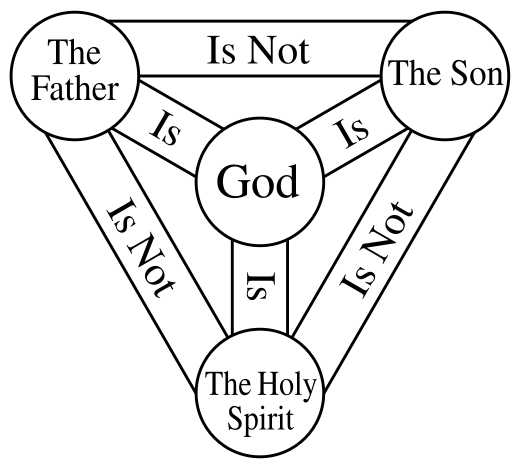
 File:Shield-Trinity-Scutum-Fidei-English.svg

On "orthodox" Trinitarianism (OT), the Trinitarianism expounded by, e.g., the Catholic Church and Eastern Orthodox Church, the second person of the Trinity, the Son, is eternally begotten of the Father. That is, the Son stands in an asymmetric dyadic relation of being eternally begotten of the Father. However, OT also teaches that each of the three persons of the Trinity, including the Son, is absolutely perfect. 

I believe that this is incoherent given the truth of certain extremely plausible metaphysical propositions. The following is my argument to this effect.

Stipulative Definitions and The Argument:  

A perfect being = df. a being who has all perfections and lacks all imperfections. 

Orthodox Trinitarianism = df. the Trinitarism held in common by Catholics, Eastern Orthodox, and classical Protestants.

  1. (Suppose that) Orthodox Trinitarianism is true. [Assumption]
  2. If (1), then the Father is perfect, the Son is perfect, and the Holy Spirit is perfect.  [definition]
  3. If (1), then the Son is eternally begotten of the Father.  [definition]
  4. The Father is perfect, the Son is perfect, and the Holy Spirit is perfect.  [1,2 --> E]
  5. The Son is perfect.  [4 &E]
  6. The Son is eternally begotten of the Father. [1,3 --> E]
  7. If (6), then the Son is ontologically dependent on the Father for his existence. [prem]
  8. Therefore, the Son is ontologically dependent on the Father for his existence. [6,7 --> E]
  9. Every entity that is ontologically dependent on another entity for its existence is not perfect. [prem]
  10. Therefore, the Son is not perfect.  [8,9]
  11. (5) contradicts (10); therefore, reject the assumption: It is not the case that Orthodox Trinitarianism is true. 

This reductio ad absurdum argument contains only two premises that are not either definitions or merely follow from the logical rules of inference, viz., (7) and (9). I regard (9) as obviously true. Being such that one is ontologically independent is a perfection. I know that this is true by intuition, and in the same way I know that being unconditionally loving is a perfection -- it just obviously is. And so the complement of this property, viz., being ontologically dependent, is an imperfection. And any being that has an imperfection is by definition not perfect. Hence (9) is true. So what about (7)? Well, I also regard (7) as obviously true. Talk of being begotten makes no sense to me whatsoever if it doesn't imply ontological dependence. Indeed, if one reads the early church fathers, it seems clear that those who held that the Son was eternally begotten of the Father believed that he was ontologically dependent on him and that his point of origination was somehow in the Father. They believed in an ancient view called the Monarchy of the Father, wherein the Father is the supreme being and source of all reality. Everything -- including the Son and the Holy Spirit -- originates in the Father. Now, I don't have time to dig up quotes to prove this point, but suffice it to say interpreting "being eternally begotten of the father" to entail "being ontologically dependent on the Father" is a completely natural straightforward interpretation of this locution, and one that I believe was the view of the early church fathers. Modern theologians and Christian philosophers may try to say that such a locution doesn't imply ontological dependence, but only something like logical dependence, whatever that means. But quite honestly, I see these attempts as nothing more than ad hoc theological rationalizations. Orthodox Trinitarianism, and hence Catholicism, Eastern Orthodoxy, etc., is simply incoherent given certain very plausible metaphysical assumptions.

Sunday, June 5, 2022

عقيدة التجسد: تناقض مبين


المسيحية ديانة غير صحيحة. لم يكن المسيح الله.

واما يسوع فكان يتقدم في الحكمة والقامة والنعمة عند الله والناس. - إنجيل لوقا

واما ذلك اليوم وتلك الساعة فلا يعلم بهما احد ولا الملائكة الذين في السماء ولا الابن الا الآب. - إنجيل مرقص

عقيدة التجسد عقيدة متناقضة و هراء بمعنى الكلمة. الله المفروض يكون كامل المعرفة، غير مقترن بزمان و مكان، الخ. المسيح لم يكن كامل المعرفة حسب الآيات المذكورة آنفا و كان مقترنا بزمان و مكان لانه عاش و مات في فلسطين قبل نحو الفين سنة. فبكل بساطة المسيح ليس الله. اللاهوتيون عبر العصور حاولوا و ما زالوا يحالون ان يجدوا مخرجا من هذا التناقض المبين، فحلهم الأكثر سائدا او انتشار هو أن المسيح كامل المعرفة بلاهوته و لكن ليس كامل المعرفة بناسوته، مقترن بزمان و مكان بناسوته ولكن غير مقترن بزمان و مكان بلاهوته. فعلى سبيل المثال، يقولون ان كان المسيح يعلم وقت مجيء ابن الإنسان (وقت مجيئه) بلاهوته ولكن كان يجهل ذلك بناسوته.(١) هذا الحل مجرد لعب بالكلمات و لا يعد حلا حقيقيا. ليست الطبيعة هي التي تعرف، و إنما الشخص. طبيعة المسيح، لاهوته و ناسوته، لم تعرف شيئا ، و إنما هو كشخص يعرف الف أو باء. طبيعتي لا تعلم شيئا، و إنما أنا كشخص اعلم. اي، الطبيعات لا تعرف شيئا، الأشخاص يعرفون. لكل شخص S بوقت محدد T ، اما يعرف S أقتراح P اما S لا يعرف P. أما يعرف ان اثنين زائد اثنين يساوي أربعة اما لا يعرف. فان تقول انه يعلم P بلاهوته و لكن لا يعلمها بناسطه يعد مجرد لفا و دوران. يعني مثل ان تقول ان بوقت T انا اعرف P من خلال سروري و لكن لا اعلمها من خلال حزني. لا يوجد أي ارتباط هنا بين الوسيلة التي اعلم P و علمي ل P. بوقت T اما اعرف P اما لا أعرفه. خلاص. لا يوجد. مجال لللف و الدوران. ولكن اللاهوتيون إعتادوا على اللف و الدوران - هذا معظم شغلهم اصلا - اي، ان يخترعوا طرق لانقاذ العقائد الدينية من التسخيف و السخرية.

١. و على فكرة، بخصوصي معرفة مجيء ابن الإنسان، هذا الرد يعتبر هرطقة بالعقيدة الكاثوليكية. ولكن هرطقة هذا الحل يجعل حل المشكلة اكثر صعوبة للكاثوليك.

Saturday, May 14, 2022

My Challenge to Bible Apologists: Produce A Single Quote of a Jewish and Christian Author affirming an Old Age for Humans


"Although Young Earth Creationism is widely despised, its hermeneutical claim is eminently plausible and deserves to be taken seriously by the biblical scholar." -- William Lane Craig

According to this Medium article, Elon Musk was once asked in an interview whether science and religion can co-exist. His answer? "Probably not." I didn't listen to the interview, but similarly to Musk, I believe that an accurate interpretation of the Bible cannot be reconciled with the findings of modern science (although I would not go as far as to say that religion and science cannot coexist -- I mean, they obviously have). Modern science is right, and the Bible is simply wrong.

I believe that the Bible is wrong in its implication that humans are merely around a few thousand years old (around 6,000 years old). Modern science teaches that humans are around 200,000 years old (and certainly no earlier than 100,000 years old). Furthermore, I strongly suspect that Christians and Jews only began to deny that humans are a mere few thousand years old when science began dismantling this Biblical worldview around the nineteenth century. That is, I believe that the change in worldview of the religious intelligentsia here was simply an ad hoc maneuver to reconcile their religious beliefs with modern science. In other words, I believe that so-called sophisticated religious people, in modifying their view regarding the age of humans to accommodate the findings of modern science -- rather than just admitting the Bible is wrong here and adopting a more down-to-earth view of Biblical composition -- are engaging in textbook cognitive dissonance. They are just rationalizing their priorly held religious beliefs. 

Indeed, I suspect that prior to around the nineteenth century, there was no Jewish or Christian author in all the annals of history who explicitly affirmed that the age of humans numbers more than a few thousand years. (If you think my suspicion is wrong, then I would very much welcome citations.) By contrast, there are many many many Jewish and Christian authors who explicitly affirmed that the age of humans, or earth and by extension humans, is no more than a few thousand years. Indeed, even Augustine and Origen, two early highly influential ecclesiastical figures who are often cited as taking the Genesis account to be figurative, explicitly affirm this. If there are indeed no Jewish or Christian writers who explicitly affirm that humans are older than a mere few thousand years, then this is damning evidence that the proper interpretation of the Bible is that humans are merely a few thousand years old, and that so-called sophisticated religious individuals merely changed their view in an ad hoc manner in modern times. It's simply not plausible that everyone understood the Biblical genealogies to be implying a young age for humans for centuries and centuries and centuries, but that only around Darwin's time (or some fifty years prior) Christians uncovered the true meaning of the ancient texts. That strikes me as a more than convenient coincidence: Just when modern science dismantles the worldview that was implied by the Bible, Christians do a complete 360 and say, "well, the Bible doesn't really teach that, everyone before us just thought it did!" Yeah...no. I'm not buying it.

I should note that the issue of the history of Jewish and Christian belief vis-a-vis the age of humans is distinct from the the issue of the history of Jewish and Christian belief vis-a-vis the age of the universe. If one believes the universe is young, then one a fortiori believes that humans are young. But the inverse of this conditional proposition doesn't hold: it's not true that if you believe that the universe is old, then you believe that humans are old. You can believe that the universe is old without simultaneously believing that humans are old. So it will not be sufficient for my critic to cite me an example of a Christian or Jewish author prior to around the nineteenth century explicitly stating that the universe is old, as that is not sufficient evidence that the relevant author believed humans are old. Some medieval Jewish kabbalist thinkers, for example, believed that the universe is old -- but they also affirmed that humans are just a few thousand years old. Even if one can find an early Church father who believed in an old universe -- and I'm not convinced there is even a single one -- that's not good evidence he believed that humans are similarly old. I would like to underscore this because some Christian apologists believe that by merely showing some early Christian writers interpreted some things in Genesis figuratively, like the word yom or day in Genesis 1, then they have thereby shown that some early Church fathers believed in an old Earth and even an old age for humans. That doesn't follow at all. Showing that an early Christian or Jewish writer interpreted Genesis and the word yom figuratively is not sufficient to show that said writer believed in an old Earth or universe, much less an old age of humans. As we will see shortly, many early church writers interpreted yom figuratively, but they still held that the world and humans are young. Moreover, even showing that a writer believed in the old age of the Earth doesn't imply showing that the writer believed in an old age for humans.

If historically there really was a diversity of opinions on this issue, as so-called sophisticated Christian apologists like to point out, then there should be at least one Christian or Jewish author who explicitly affirms an old age for humans (i.e., more 6,000 - 10,000 years). If there is no such citation in all the annals of history, then that is extremely strong evidence that the recent "sophisticated" Christian view of attributing an old age to humans is simply an ad hoc maneuver and an example of irrational eisagesis. 

In what follows I will list a series of quotes from Jewish and Christian thinkers where they explicitly teach that humans, or the world and by extension humans, are a mere few thousand years old (like I implied above, if one shows that an author believes that the universe or world is young, then one has thereby shown that the author believes that humans are also young). I intend this to be an ever growing list, one which I will add to as time goes on. 

And again, if Bible apologists have citations where people are explicitly affirming an old age for humans before around the nineteenth century, then I would very much welcome them! I suspect that they don't exist, but I may well be wrong. 

---------------------

The following are some Christian authors from all over the Christian world who explicitly affirmed the youngness of humans: the author of the Epistle of Barnabas (written c. 70 - 132 AD), Irenaeus of Lyon (c. 130 – 202 AD), Theophilus of Antioch (d. 183-5), Clement of Alexandria (c. 150 215 AD), Hippolytus of Rome (c. 170 – 235 AD), Origen of Alexandria (c. 185 - 253), Julius Africanus (c. 160 - 240), Hilary of Pontiers (c. 310 –  367), Lactantius (c. 250 – 325), Frimicus Maternus [not added yet], Eusebius of Caesarea (c. 260 - 339), Ephrem the Syrian (c. 306 - 373), Sulipicus Severus (c. 363 – 425), Gaudentitus of Brescia (d. 410) [not added yet], Tyconius (4th century)[not added yet], Augustine of Hippo (c. 354 - 430), Martin Luther, John Calvin, James Ussher, Hilary Bullinger, and Zacharias Ursinus. Citations are listed in an ad hoc manner.

Give heed, children, what this meaneth; He ended in six days. He meaneth this, that in six thousand years the Lord shall bring all things to an end; for the day with Him signifyeth a thousand years;
and this He himself beareth me witness, saying; Behold, the day of the Lord shall be as a thousand years. Therefore, children, in six days, that is in six thousand years, everything shall come to an end.

- The Epistle of Barnabas 15:4

For in as many days as this world was made, in so many thousand years shall it be concluded. And for this reason the Scripture says: Thus the heaven and the earth were finished, and all their adornment. And God brought to a conclusion upon the sixth day the works that He had made; and God rested upon the seventh day from all His works. Genesis 2:2 This is an account of the things formerly created, as also it is a prophecy of what is to come. For the day of the Lord is as a thousand years; 2 Peter 3:8 and in six days created things were completed: it is evident, therefore, that they will come to an end at the sixth thousand year. 

- Iraneaus of Lyon - Against Heresies 5.28.3

 For the first advent of our Lord in the flesh, when he was born in Bethlehem, was December 25th,Wednesday, while Augustus was in his forty-second year, but from Adam, five thousand and five hundred years. 

- Hippolytus of Rome Commentary on Daniel 4 (23.3.)

Plato and many others of the philosophers, since they were ignorant of the origin of all things, and of that primal period at which the world was made, said that many thousands of ages had passed since this beautiful arrangement of the world was completed; and in this they perhaps followed the Chaldeans, who, as Cicero has related in his first book respecting divination, foolishly say that they possess comprised in their memorials four hundred and seventy thousand years; in which matter, because they thought that they could not be convicted, they believed that they were at liberty to speak falsely. But we, whom the Holy Scriptures instruct to the knowledge of the truth, know the beginning and the end of the world, respecting which we will now speak in the end of our work, since we have explained respecting the beginning in the second book. Therefore let the philosophers, who enumerate thousands of ages from the beginning of the world, know that the six thousandth year is not yet completed, and that when this number is completed the consummation must take place, and the condition of human affairs be remodelled for the better, the proof of which must first be related, that the matter itself may be plain. 

-Lactantius - Divine Institutes 7.14

The world was created by God nearly six thousand years ago. 

- Sulpitius Severus Sacred History 1.2.1

 For why should I speak of the three myriad years of the Phoenicians, or of the follies of the Chaldeans, their forty-eight myriads? For the Jews, deriving their origin from them as descendants of Abraham, having been taught a modest mind, and one such as becomes men, together with the truth by the spirit of Moses, have handed down to us, by their extant Hebrew histories, the number of 5500 years as the period up to the advent of the Word of salvation, that was announced to the world in the time of the sway of the Caesars. 

- Julius Africanus; Fragment 1.  

It is an ancient adversary and an old enemy with whom we wage our battle: six thousand years are now nearly completed since the devil first attacked man... As the first seven days in the divine arrangement containing seven thousand of years, as the seven spirits and seven angels which stand and go in and out before the face of God, and the seven-branched lamp in the tabernacle of witness, and the seven golden candlesticks in the Apocalypse, and the seven columns in Solomon upon which Wisdom built her house l so here also the number seven of the brethren, embracing, in the quantity of their number, the seven churches, as likewise in the first book of Kings we read that the barren has borne seven. 

- Cyprian of Carthage Exhortation to Martyrdom 

After these statements, Celsus, from a secret desire to cast discredit upon the Mosaic account of the creation, which teaches that the world is not yet ten thousand years old, but very much under that, while concealing his wish, intimates his agreement with those who hold that the world is uncreated.

 - Origen of Alexandria - Contra Celsus 1.19

From Adam to the deluge are comprised two thousand one hundred and forty-eight years, four days. From Shem to Abraham, a thousand two hundred and fifty years. From Isaac to the division of the land, six hundred and sixteen years. Then from the judges to Samuel, four hundred and sixty-three years, seven months. And after the judges there were five hundred and seventy-two years, six months, ten days of kings....Philo himself set down the kings differently from Demetrius. Besides, Eupolemus, in a similar work, says that all the years from Adam to the fifth year of Ptolemy Demetrius, who reigned twelve years in Egypt, when added, amount to five thousand a hundred and forty-nine; and from the time that Moses brought out the Jews from Egypt to the above-mentioned date, there are, in all, two thousand five hundred and eighty years. And from this time till the consulship in Rome of Caius Domitian and Casian, a hundred and twenty years are computed.

- Clement of Alexandria, The Stromata 1.? 

Two thousand two hundred and forty-two years elapsed from Adam to the flood. Thus the grand total, from Adam to the second year of Darius and the second building of [the temple in] Jerusalem, is 4680 years [g189]. From the second year of Darius which was the first year of the 65th Olympiad [520 B.C.] [until the time of Christ], is 137 Olympiads and 548 years.

-  Eusebius of Caesarea, Chronicon. Eusebeius wrote the earliest history of Christianity.

Unbelievers are also deceived by false documents which ascribe to history many thousand years, although we can calculate from Sacred Scripture that not 6,000 years have passed since the creation of man.

 - Augustine. The City of God, translated by G. G. Walsh and G. Monahan (1952), Book 12, Chapter 11, p. 263. Washington, D.C.: Catholic University of America Press. See another translation here

 - For some, maintaining that the world was uncreated, went into infinity; and others, asserting that it was created, said that already 153,075 years had passed . . . For if even a chronological error has been committed by us, of, e.g., 50 or 100, or even 200 years, yet not of thousands and tens of thousands, as Plato and Apollonius and other mendacious authors have hitherto written..All the years from the creation of the world amount to a total of 5698 years, and the odd months and days.

 -  Theophilus of Antioch To Autolycus, 3:16,28

 For since in six days God made the heaven and the earth, and finished the whole world, and rested on the seventh day from all His works which He had made, and blessed the seventh day and sanctified it, Genesis 2:1 so by a figure in the seventh month, when the fruits of the earth have been gathered in, we are commanded to keep the feast to the Lord, which signifies that, when this world shall be terminated at the seventh thousand years, when God shall have completed the world, He shall rejoice in us.

 - Victorinus - On the Creation of the World, Book ?

 Man, O Death, despise it not, that image of Adam: which like a seed is committed to earth, till the Resurrection. — 2. R., To you be glory Who descended and plunge, after Adam: and draw him out from the depths of Sheol, and bring him into Eden!— 3. Death, I marvel at this seed, and at your words: for lo! After five thousand years, it springs not yet.— 4. M., Its present state passes away, as winter does: and as a handful of grain it comes in the resurrection, to the garner of life.— 5.

- Ephrem the Syrian (The Nisibine Hymns, Hymn 65)  

We know from Moses that the world was not in existence before 6,000 years ago.

- Martin Luther, Lectures on Genesis, in Luther’s Works, ed. Jaroslav Pelikan (St. Louis, MO: Concordia, 1958), 1:ix, 3.

“The duration of the world . . . has not yet attained six thousand years." 

- John Calvin, Institutes of the Christian Religion, trans. Ford Lewis Battles, ed. John T. McNeill (Philadelphia, PA: Westminster Press, 1960), 1.14.1.

And from the beginning of the world to the birth of Moses are fully complete two thousand three hundred and sixty-eight years of the world.

- Henry Bullinger, The Decades of Henry Bullinger, 1:42.

According to the common reckoning, it is now, counting from this 1616 of Christ, 5534 years since
the creation of the world.
..These calculations harmonize sufficiently with each other in the larger numbers, although some years are either added or wanting in the smaller numbers. According to these four calculations, made by the most learned men of our times, it will appear, by comparing them together, that the world was created by God at least not much over 5,559 or 5,579 years. The world, therefore, was not created from everlasting, but had a beginning.

- Zacharias Ursinus, Commentary on the Heidelberg Catechism. Ursinus was the primary author of the Heidelberg Catechism.

But setting these two or three instances aside, who has been able in the course of near 6,000 years to the evade the execution of this sentence passed on Adam and all his posterity?

- John Wesley, Sermon on the Fall of Man, ~15:00

"On crioria peut-etre , qu' il y -a de I exageration en ela; mais j'ai recuilli moi-meme, plus de 200, calculs differens, dont le plus court ne conte, que 3483. Ans, depuis la creation du monde jufque'a jefus-christ. & le plus long en conte 6984." -

- The theologian, mathematician and historian Alphonse de Vignoles. Chronologie De L'Histoire Sainte Et Des Histoires Etrangeres Qui La Concernent Depuis La Sortie D'Egypte Jusqu'A La Captivite De Babylone (1738).

He states in the introduction to his treatise on chronology that he had found well over 200 different calculations of the time from the birth of the world to Christ, and that they varied in dating the creation of the world from 3483 years to 6984 years before Christ.

  - The Jewish Virtual Library states the following: "The vast majority of classical Rabbis hold that God created the world close to 6,000 years ago, and created Adam and Eve from clay." Note that this doesn't imply that there were some Rabbis who held that Adam and Eve weren't created around 6,000 years ago. It just implies that some Rabbis didn't believe that the world was created some 6,000 years ago. Indeed, there were esoteric medieval Jewish kabbalists who believed that the world extended back some 974 generation-times prior to the creation of Adam. But, as far as I know, there is no evidence they denied the recieved view concerning the age of humans. Indeed, the Jewish Virtual Library's section on evolution continues: "A literal interpretation of the biblical Creation story among classic rabbinic commentators is uncommon (yet there is universal agreement regarding the literal understanding of the time of the creation of Adam)." [Ibid., emphasis is mine]

- The second-century Hebrew chronology Seder Olam Rabbah calculates the creation of the world to only a few thousand years. So does Maimonedes' calendar.

-----------

Extra Notes:

 I still need the translated text for Tyconius, the Book of Rules, 56.7-20; 61.25-33. Current citation is found in Tyconius’ Book of Rules: An Ancient Invitation to Ecclesial Hermeneutics by Matthew R. Lynskey. I surmise he uses the translation found in the dissertation of Douglas Leslie Anderson. If someone has access to that dissertation, please send it my way.

 "The significance of Tyconius’ reading of Revelations comes into sharper focus when we consider the established tradition of apocalyptic commentary, particularly in the West. In earlier commentaries, two features had figured prominently : millenarianism, and persecution. Christian millenarianism focused on the cosmic week, an eschatological concept drawing on Genesis 1, Psalm 90, and Revelations. As God created the world in six days, and a day to him is like a thousand years, so the world would exist 6,000 years after which, at the end of the sixth age in the year 6,000 from the Creation, Christ would return to inaugurate the millenarian Sabbath rest and the thousand-year reign of the saints."

 - Paula Fredriksen, New Testament Scholar; source: https://www.brepolsonline.net/doi/pdf/10.1484/J.REA.5.10444; This should help give some of the doxastic context for some of the quotes cited above.


Saturday, April 30, 2022

Some Problems with the Perverted Faculty Argument


The Perverted Faculty argument is the central argument used by proponents of what is called (Old) Natural Law Theory (ONLT) to justify conservative sexual ethics. Typically, proponents of ONLT are Catholics (David Oderberg and Edward Feser come to mind); but this is not always the case (cf., e.g., Timothy Hsiao). The basic idea behind PFA reasoning is that our faculties have certain discernible natural ends. The end of the eye is to see, for example. The end of the reproductive faculty is to reproduce, etc. Actively frustrating these ends, so the reasoning goes, is always and everywhere immoral. Proponents of ONLT use such reasoning to rule out many sexual acts, including, but not limited to, masturbation (without finishing in coitus), homosexual acts, and contraceptive acts (including "the pullout" method). While I believe there is much to commend in the idea that the universe is chalk full of teleology, ends, and purpose -- a metaphysic presupposed by ONLT -- I believe that PFA reasoning in service of justifying conservative sexual ethics is quite weak. I explain some of my reasons for thinking this below.

In responding to counterexamples against their view, Old Natural Law Theory proponents of the Perverted Faculty Argument (PFA) make a distinction between using a faculty for something other than its natural end, and using a faculty for something against its natural end or actively frustrating its natural end. Proponents of the PFA grant that using a faculty for something other than its natural end, provided that the act doesn't frustrate the faculty's end, can be morally permissible. However, they would say that actively frustrating or acting against the end of a faculty is never morally permissible. But I've always thought that the way the distinction is appealed to in order to deflect counterxamples whilst simultaneously trying to justify the immorality of, e.g., masturbation and homosexual acts is ad hoc. I don't see why masturbating or homosexual acts are examples of using the sexual/reproductive faculty for something against its natural end rather than just for something other than its end (but not against its end). In order for PFA arguments for conservative sexual morality to work, acts like masturbation and male-on-male anal sex have to be acts that actively frustrate the end of the sexual faculty -- they can't *merely* be acts that utilize the sexual faculty for something other than its end. I can see why, for example, for a man to physically castrate himself would be to actively frustrate and indeed destroy his sexual or reproductive faculty. But I don't see how masturbation or a male-on-male sex is actively frustrating the end of the sexual faculty. One is just using the sexual faculty for something other than its end. But I don't see how one is frustrating anything here. 
 
Feser says the following in order to justify why masturbatory acts are contrary to the end of the sexual or reproductive faculty, for example: 
 
"Masturbatory acts involve a twofold frustration of the natural ends of sex. For one thing, they frustrate the procreative end insofar as the natural end of the physiological process in the male leading from arousal to ejaculation is not only to get semen out of the male but into the vagina, while the natural end of the physiological process of arousal in the female is to prepare the vagina for reception of semen. But these acts also frustrate the unitive end insofar as arousal is “other-directed” in a psychological sense no less than a physiological sense. Male sexual arousal is of its nature woman-oriented, and female sexual arousal is of its nature man-oriented. In each case realization of the natural end requires connecting emotionally as well as physically with another person. Masturbatory acts involve the active taking of the process of arousal to a climax that does not involve another person, and thus turns it against its natural end."
 
I still don't get the insistence on why masturbatory acts actively frustrate the end of the sexual faculty, rather than just being acts that use it for a different end. It's true that the natural end of sex "is not only to get semen out of the male but into the vagina," but that doesn't mean that solo masturbation (without the end of coitus) is somehow actively frustrating the end of the sexual or reproductive facutly rather than just using the faculty for something other than its natural end. And he needs the bolder claim for his argument to go through. It seems quite unmotivated to me.
 
Regarding his second point, coming from a secular perspective, I don't see a good reason to think that sex has such a "unitive end," which natural-law theorists ostensibly take to be realized in a unitive, comprehensive, exclusive and-open-to-children union with exactly one person of the opposite sex. That may be the view of  Genesis 1/2 and Jesus, but that's difficult to maintain on a secular view of the evolutionary history of higher animals and homo sapiens, a history which seems to suggest sex is more for males to nonexclusively spread their seed as far and wide and possible, rather than for the engenderment of comprehensive exclusive unions, as poetic as that may sound. Indeed, it seems like one needs to appeal to a certain revelatory version of theism in order to justify the view that one of the ends of the sexual or reproductive faculty is exclusive comprehensive open-to-children union with exactly one person of the opposite sex. The idea that the purpose of the reproductive or sexual faculty in humans is reproduction seems quite plausible just from observing the world around us. However, I think when we start talking about the aforementioned (specific) unitive end of the sexual faculty, then one has to appeal to a specific version of theism and indeed revelation. It's nowhere near apparent, just from looking at our evolutionary history, that the end of the sexual faculty is a comprehensive exclusive open-to-children union. I think proponents of NL theory are wittingly or unwittingly sneaking religious assumptions through the backdoor here. The idea that there's such a (comprehensive) unitive end to the sexual faculty will only be convincing to certain sects of religious people who already believe that for different reasons. Muslims, e.g., don't believe that. Polygyny is explicitly allowed in the Qur'an and Muhammad had way more than one sexual partner. In early Judaism polygny was sanctioned and widely practiced. How will the proponent of ONLT convince such people to adopt their Catholic-ish conservative secular ethics without simultaneously trying to argue for their particular religion, the truth of which will no doubt make PFA arguments moot? That comprehensive exclusive open-to-children union is  an end of the sexual or reproductive faculty is simply not something that is evident to the natural light. One needs religious presuppositions to justify a robust conservative sexual ethic with PFA-reasoning. But if the truth of a religion like Catholicism is already established, then PFA reasoning becomes quite moot. So PFA arguments strike me as pretty much only convincing to people who are already predisposed to conservative Christian ethics.

Therefore, my judgement on Old Natural Law theory is that while its underlying metaphysic seems to
have something going for it, pace its proponents, the metaphysic is not sufficient, without appeal to religious doctrines, to derive a conservative sexual ethic. There's no good secular reason to believe that masturbation or homosexual acts actively frustrate the end of the sexual faculty, rather than just being acts that stimulate the sexual faculty for something other than, but not contrary to, its end.

Tuesday, April 26, 2022

Should the State be Involved in Marriage To Begin With? Homosexual Marriages and State Interest


I have difficulty seeing why the government should be involved in marriage at all given that homosexual marriage has been enshrined into law.

When I ponder marriage, I find myself concluding that the only possibly compelling reason for the government to be involved in marriage to begin with is because it has an interest in perpetuating itself (and the only reason I add the qualifying adjective "possibly" is because I am not sure the government should be involved in marriage in the first place). In other words, the state has an interest in providing stable healthy environments for its future denizen,viz., children, and helping married couples provide that is why the state is involved. Yes, some married people never have children; some are physically unable to have children. But these are exceptions to the rule: historically, married couples have had children with one another. And laws are directed to the common good, not to individual goods, which is why it made sense to give married couples tax benefits -- they will typically have children and children are, as many parents know, expensive. So in order to help married couples provide a stable environment for childrearing, the state gives them tax breaks. This is, I believe, the only possibly compelling reason for why the state should be involved in marriage to begin with. 

But this reason for the state's involvement does not extend to homosexual marriage. Per Obergefell v. Hodges, the state now recognizes as marriage a type of union which cannot possibly produce children. The only way for married homosexual couples to have children is for them to adopt (or at least for one of them to). And the vast majority of married homosexual couples do not raise children. So, because it is biologically impossible for homosexual couples to reproduce, and because only a small percentage end up adopting and raising children, it would seem that the state's interest in such unions should be minimal or nonexistent. Unlike in the case of heterosexual marriage, there's simply no similarly possibly compelling reason why the state should support these types of unions. The state should not be in the business of regulating love affairs, as most people would grant. But that is basically what the current state of play is in the United States. Once you take children out of the equation, the state's regulation of marriage simply amounts to the state's regulation of peoples' love affairs. And I submit to you that it is no business of the state to be involved with the love affairs of its denizens. Why should the state care whether Joe and Bob, or Mary and Sally, would like to live with one another and engage in sexual acts in the privacy of their own bedrooms? I can detect no compelling reason for the state to insert its tentacles here. And given that I see no compelling or even good reason for state involvement here, I believe that  giving out tax breaks in support of homosexual marriages is simply a waste of hard-earned taxpayer money. Basically, I believe that the state's blessing homosexual unions and thereby elevating them to the status of a legally codified contract called "marriage" is silly. I see it as a reductio ad absurdum for current government involvement in marriage in the first place. Maybe the state should recognize hetereosexual marriages, maybe not. But if  the state is going to recognize homosexual unions as marriages, then I think it's better off just getting out of the marriage business entirely. If, as I believe, the only putatively compelling reason for the state to be involved in marriage to begin with is children, and marriage is, from the state's perspective, no longer about children, then the state should no longer be involved in marriage.

Now, someone may respond and say that while it is true that it is biologically impossible for homosexual married couples to produce children, and that most of them do not end up raising children for adoption, many heterosexual couples do not end up raising children either (whether because of infertility issues or otherwise). So, the argument goes, my view unjustly discriminates against homosexuals. By way of rejoinder I would repeat what I said above: laws are meant to be promulgated for the common good, and not to individual goods. That is, laws are not meant to make exceptions, but to make rules -- exceptions and particularities are handled at the level of the actual application of the law to a particular case. Most heterosexual married couples can conceive and have historically had children. The same is not the case for homosexual married couples. So there is no unjust discrimination in my view that there is a putatively compelling state interest in enshrining heterosexual marriages into law, but not homosexual marriages. However, I'm open to the possibility of only bestowing tax breaks for married couples, heterosexual or otherwise, who can prove that they are raising children. But perhaps that will be too messy. And perhaps that's all the more reason the state should finally get out of the marriage business.

Thursday, March 24, 2022

People Come and Go Like the Wind


Life isn't black and white and so this isn't always true. Rarely do general rules concerning human behavior not admit of exceptions. But nonetheless, I've found this to be true the vast vast majority of the time. People take different paths on their Earthly sojourns. Sometimes those paths may cross with yours for a short time only, sometimes for a long time, and sometimes they may not cross at all. But, in any relationship you have with someone, great or small, friendly, familial, or romantic - never try to force it. That's not to say that you should turn inward on yourself. No, of course not. After all, no man is an island unto himself; and humans are social animals, to paraphrase Aristotle. But the point is that you should realize that you do not need to have your concern, friendliness, or love reciprocated by anyone. So you shouldn't chase anyone who is not interested in making time for you. If people really want to be with you, talk to you, reach out to you, they will. If they do not want to, then they will not. And that is totally okay. We are all on different journies in this world. Peace be with you.